
Strength potential
High-tenacity tire cord and filament waste is selected to support useful strength in recovered fibre.
Quality & material recovery
Input selection, category separation and clean white material are central to the strength, appearance and processing performance we aim to deliver.
Quality pillars
High-tenacity tire cord and filament waste is selected to support useful strength in recovered fibre.
Good white input material helps support clean-looking fibre and brighter downstream yarn.
Separated material handling helps reduce foreign-material variation during category-appropriate dyeing.
Material acceptance
Practical inspection
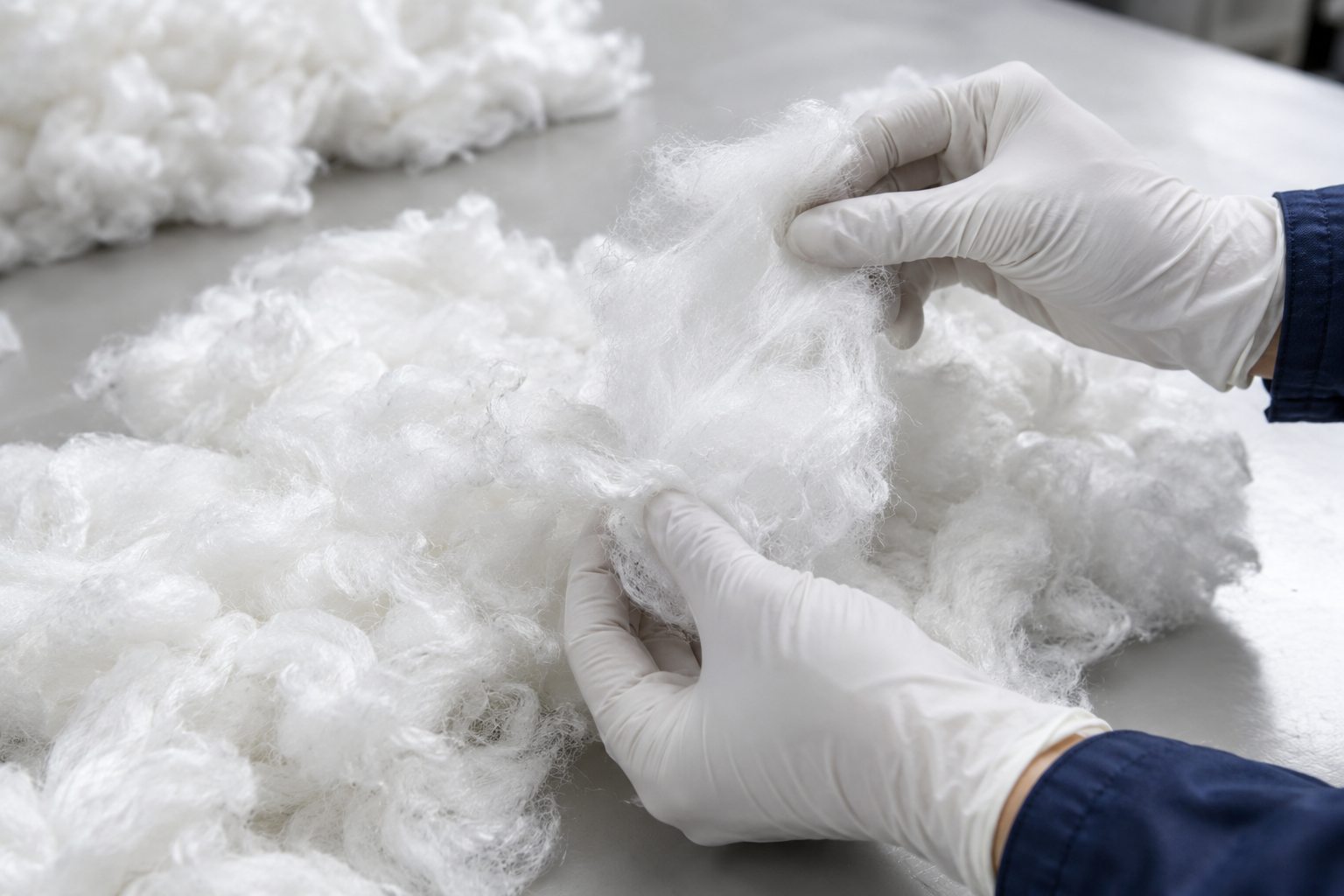
Finished fibre is reviewed for opening, softness, appearance, visible contamination, neps and general processing consistency.
We recommend agreeing the requirement, reviewing available material, conducting sample or trial validation where appropriate, and documenting commercial specifications before repeat supply.
Discuss Quality RequirementsChoose the enquiry that matches your requirement.
I want to buy garnetted fibreI want to offer raw materialCall +91 99910 40057